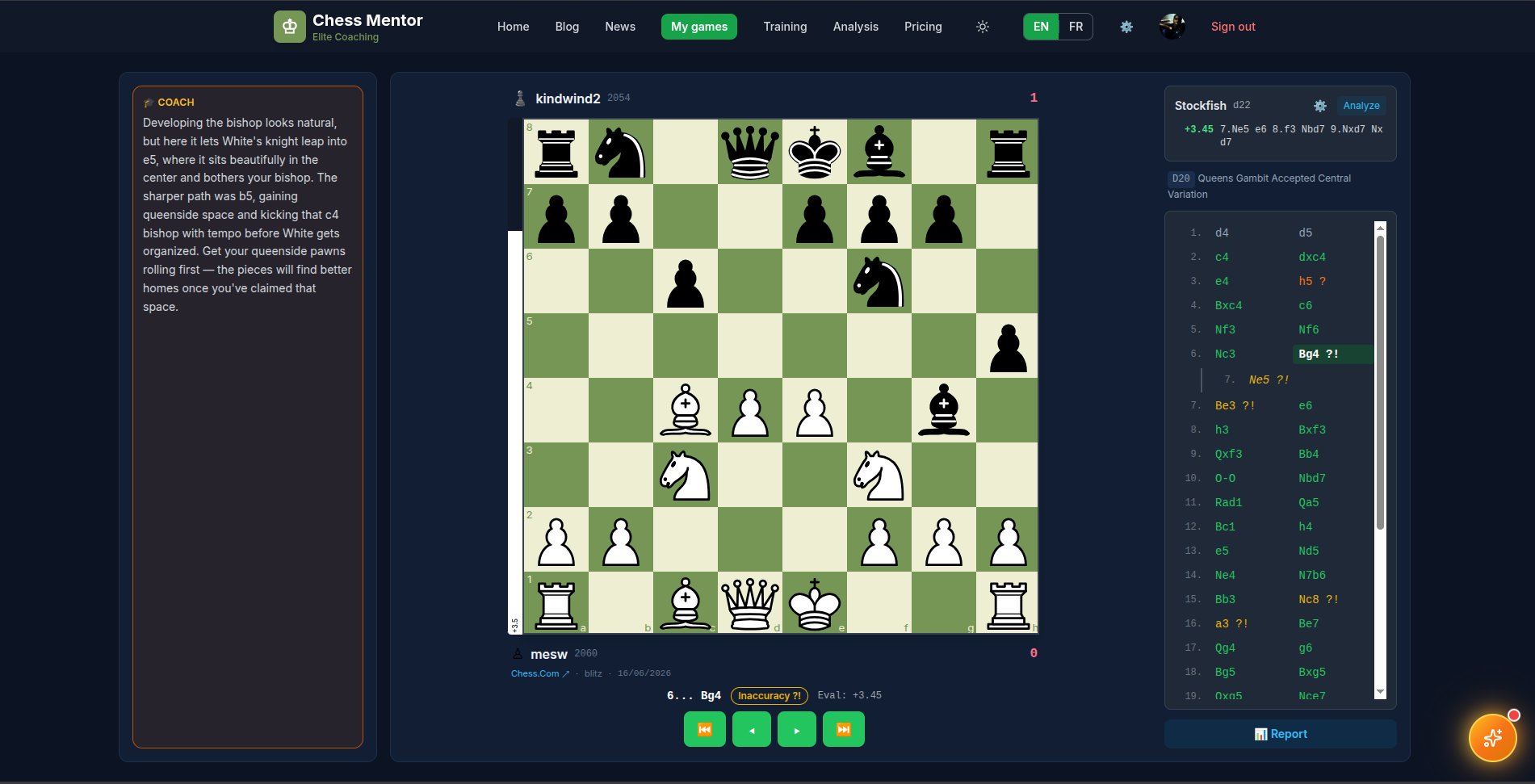
Depuis que nous avons accès aux LLM, mon rêve de joueur d’échecs était de les associer à Stockfish pour enfin avoir des commentaires explicatifs au lieu de longues lignes d’ordinateur.
Et je voulais ces commentaires justes, précis, et sans hallucinations. Je n’ai jamais été aussi proche du but. ♟
Le secret ? C’est qu’on ne laisse jamais le LLM lire l’échiquier tout seul, parce que c’est exactement là qu’il se met à inventer. À la place, un vrai moteur d’échecs fait le travail d’observation et lui tend des faits déjà vérifiés : le matériel exact, la nature des fous, la structure, la phase de la partie.
L’évaluation de Stockfish lui arrive traduite en mots plutôt qu’en chiffres, par exemple « léger avantage aux Blancs », pour qu’il ne puisse pas inventer un score. Et quand il s’agit de citer un coup précis, il ne pioche que dans la liste des meilleures variantes calculées par Stockfish, jamais ailleurs, donc fini le « Tour h4 » quand il n’y a aucune tour sur la colonne.
Enfin, chaque coup qu’il mentionne est revérifié contre la position avant d’être affiché.
Au fond, Stockfish calcule, le moteur vérifie, et le LLM se contente d’expliquer. Chacun fait ce qu’il sait faire de mieux, et c’est comme ça qu’on obtient un vrai coach. ♟
Si vous voulez tester : chessmentorai.com
Publié originalement sur X